
The body content of your post goes here. To edit this text, click on it and delete this default text and start typing your own or paste your own from a different source.
This is paragraph text. Click it or hit the Manage Text button to change the font, color, size, format, and more. To set up site-wide paragraph and title styles, go to Site Theme.
Broken furniture does not always mean it needs to be replaced. A cracked chair leg, split table edge, damaged cabinet, or broken wooden frame can often be repaired with a few basic tools and the right technique. Learning how to repair broken wood can save money and help extend the life of furniture you already own. The key is to identify the type of damage before reaching for glue or filler. A clean break may need only wood glue and firm clamping, while missing chunks, deep cracks, or badly damaged joints require a stronger repair method. The basic process is simple: clean, fit, glue, clamp, cure, sand, and finish . What Is the Best Way to Repair Broken Wood? The best method depends on how badly the wood is damaged. Wood glue works well for clean breaks and loose joints , while wood filler or epoxy can help repair small gaps, chips, and missing sections. For larger structural breaks, reinforcement or professional restoration may be necessary. Before starting, remove loose splinters, dust, old adhesive, and dirt. Dry-fit the broken pieces first to make sure they fit together correctly. 7 Key Features of a Good Wood Repair 1. Strong Wood Glue Use a suitable wood adhesive for clean breaks and separated joints. Apply enough glue to cover the mating surfaces without creating excessive squeeze-out. 2. Proper Clamping Clamps hold the broken sections firmly together while the adhesive cures. For unusual shapes, strap clamps or carefully positioned tape may help. 3. Clean Surfaces Dust, old glue, and loose fibers can weaken a repair. Cleaning the damaged area before applying adhesive helps the pieces make better contact. 4. Wood Filler for Small Gaps Small holes, dents, and surface imperfections can usually be filled and sanded after the main repair has cured. 5. Epoxy for Larger Damage Two-part epoxy can be useful when wood is missing or the damaged area needs additional filling and strength. Choose a product appropriate for the material and application. 6. Careful Sanding Once the repair is completely cured, sand the area gradually. Start with suitable coarse paper if necessary and finish with a finer grit for a smoother surface. 7. Matching the Finish After repairing and sanding, stain, paint, or finish the area to match the surrounding wood. Test the color on an inconspicuous area first. How to Repair Broken Wood Step by Step Step 1: Inspect the break and check whether the pieces still fit together. Step 2: Remove dirt, dust, loose fibers, and old adhesive. Step 3: Apply a suitable wood glue to the joining surfaces. Step 4: Press the pieces together and align them carefully. Step 5: Secure the joint with clamps or another appropriate method. Step 6: Allow the adhesive to cure according to the manufacturer's instructions. Leaving a properly clamped joint overnight can provide additional curing time. Step 7: Remove excess glue, then sand the repaired area after it has fully cured. Step 8: Apply filler or epoxy if gaps remain, sand again, and refinish the surface. How to Know Which Repair Method to Use? For a clean crack or broken joint , start with wood glue and clamping. For a small chip or shallow hole, wood filler may be enough. Larger missing sections may require epoxy or another structural repair material. If the damaged piece supports significant weight, such as a load-bearing chair leg or structural furniture component, do not rely on appearance alone. The repair needs to restore adequate strength, not simply hide the damage. Common Beginner Mistakes to Avoid One common mistake is using too much glue. More adhesive does not automatically create a stronger joint. Another is sanding or stressing the repair before the adhesive has properly cured. Do not cover a dirty or poorly aligned break with filler and expect it to become strong. The underlying joint must be repaired first; cosmetic filling comes afterward. Practical Repair Insight A useful beginner lesson is to spend more time preparing the broken pieces than rushing into the gluing stage. A clean, well-aligned break is usually easier to repair than a messy one. Clamping also matters because movement during curing can leave the joint weak or visibly uneven. These simple preparation steps make a noticeable difference in the final result. Pros and Cons Pros Saves money compared with replacing furniture Extends the life of wooden items Requires relatively simple tools Can restore the appearance of damaged furniture Cons Some structural damage requires professional repair Poor alignment can make the damage more visible Matching stain or finish can be difficult Adhesive needs adequate curing time Can You Download a Wood Repair Guide? There is no legitimate “game download” or APK associated with this topic. If you publish a downloadable resource, a printable broken-wood repair checklist or DIY repair guide would be more relevant to readers than an unrelated app or game. What About Registration, Deposits, and Winning Tips? These terms apply to online games or betting platforms, not to repairing wooden furniture. Adding them to this article would create a mismatch with the searcher's intent. For a wood-repair website, practical information about tools, materials, safety, and repair techniques is much more useful. Conclusion Repairing broken wood is often easier than beginners expect. Start by identifying the damage, cleaning and aligning the pieces, and choosing the appropriate glue, filler, or epoxy. Give the repair enough curing time before sanding or using the furniture. For those who need professional help restoring damaged wood, Sorto's Caning Repair can be a helpful resource. With patience and careful preparation, many damaged wooden items can be restored instead of thrown away. FAQs Can broken wood really be repaired? Yes. Many cracks, splits, broken joints, chips, and small missing sections can be repaired using suitable adhesives, fillers, clamps, and finishing techniques. What is the best glue for broken wood? A suitable wood glue is commonly used for clean interior wood joints. Outdoor projects may require an adhesive specifically designed for exterior exposure. Can I repair wood without clamps? Sometimes. Tape or other temporary holding methods can work for certain small repairs, but clamps generally provide more reliable pressure and alignment. When should I replace instead of repair broken wood? Consider replacement or professional restoration when the wood is severely rotten, structurally compromised, extensively missing, or part of a safety-critical component.
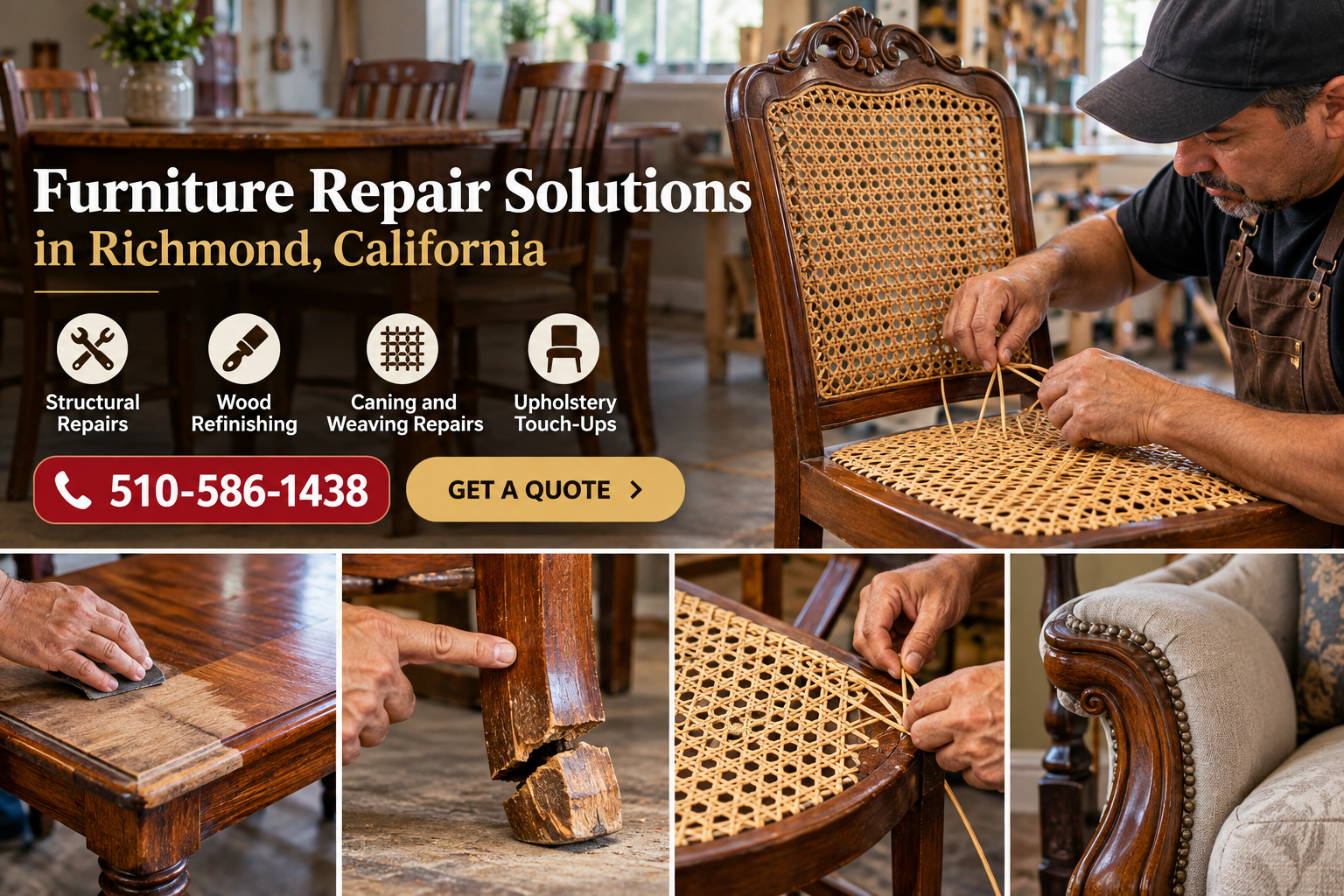
Restore your furniture with expert repair, refinishing, caning, weaving, and upholstery services in Richmond, CA. Call Sorto's Caning Repair at 510-586-1438.